


Low temperatures are an important factor to consider when designing and maintaining electrical installations. Outdoor installations, industrial plants and applications in particularly cold environments can expose cables to demanding conditions. Cold can affect the properties of the materials used in electrical cables, making some sheaths and insulation materials stiffer and, under certain conditions, more susceptible to mechanical stress.
This is why it is important to choose cold-resistant cables designed to retain their properties even at temperatures below freezing.
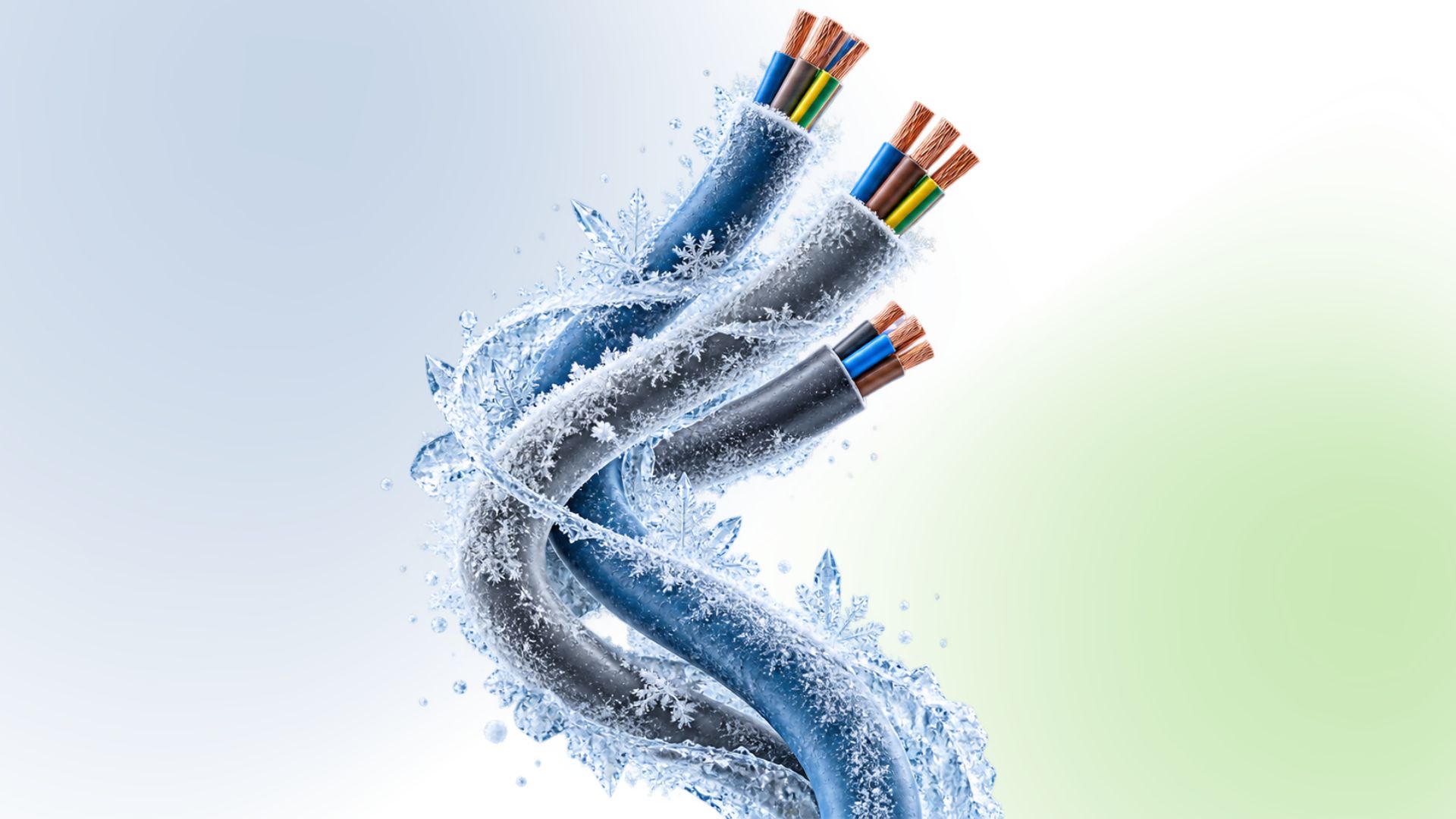
How do low temperatures affect electrical cables?
The main effect of cold concerns insulation materials and outer sheaths. As temperatures fall, some materials may lose some of their flexibility, increasing the risk of cracking or damage when cables are bent, subjected to impacts or handled. However, it is important to distinguish between two conditions:
- Minimum operating temperature: the lowest temperature at which the cable is designed to operate under the specified conditions.
- Minimum installation temperature: the lower temperature limit to be observed during installation, when the cable is handled, bent or unwound.
A cable designed to operate at −40°C is not necessarily suitable for installation or handling at the same temperature. The type of application also matters: a cable intended for fixed installation may have different requirements from one subjected to repeated movement.
How is cable resistance to low temperatures tested?
Specific technical standards define tests for assessing the behaviour of insulation and sheathing materials at low temperatures. These include:
- EN 60811-504: specifies low-temperature bending tests.
- EN 60811-505: covers low-temperature elongation tests.
- EN 60811-506: specifies low-temperature impact tests.
These tests assess the mechanical behaviour of materials in cold conditions, at the temperatures and according to the requirements established by the standards applicable to each product. There is therefore no single cold-resistance rating that applies to all cables: it is essential to consult the technical specifications of each product and the relevant conditions of use.
Examples of SADA CAVI cables for low-temperature applications
The SADA CAVI catalogue includes a range of cables with characteristics suitable even for particularly low temperatures.
The H07BQ-F cable, with EPR rubber insulation and a polyurethane (PUR) sheath, has a declared operating temperature range of −55°C to +90°C. It is suitable for electrical equipment connections exposed to abrasion and mechanical stress.
The H07RN-F cable, with rubber insulation and a polychloroprene sheath, has a declared minimum operating temperature of −40°C and is used in a wide range of industrial and professional electrical applications.
SADACONTROL 500 P, primarily intended for command and control applications with fixed installation, also has an operating temperature range of −40°C to +80°C, with a polyurethane sheath that is also resistant to industrial oils.
These products are intended for different applications: the temperature ratings stated in their technical data sheets must always be considered alongside the installation method and the expected mechanical stresses.
Choosing the right cable starts with the operating conditions
Resistance to low temperatures is only one of the factors to consider when selecting an electrical cable.
In addition to cold, cables may be exposed to humidity, water, UV radiation, oils, vibration and mechanical stress. Cable selection must therefore take account of the installation environment and the conditions in which the connection is expected to operate.
SADA CAVI offers a wide range of products for industrial, energy and automation applications, supporting customers in selecting the most suitable solutions even in particularly demanding environmental conditions.
