In a complex system, every component has a role. Some are visible, easily recognizable, and at the center of attention. Others work silently, often hidden inside electrical panels, systems, machines, production lines or infrastructures.
Electrical cables often belong to this second category.
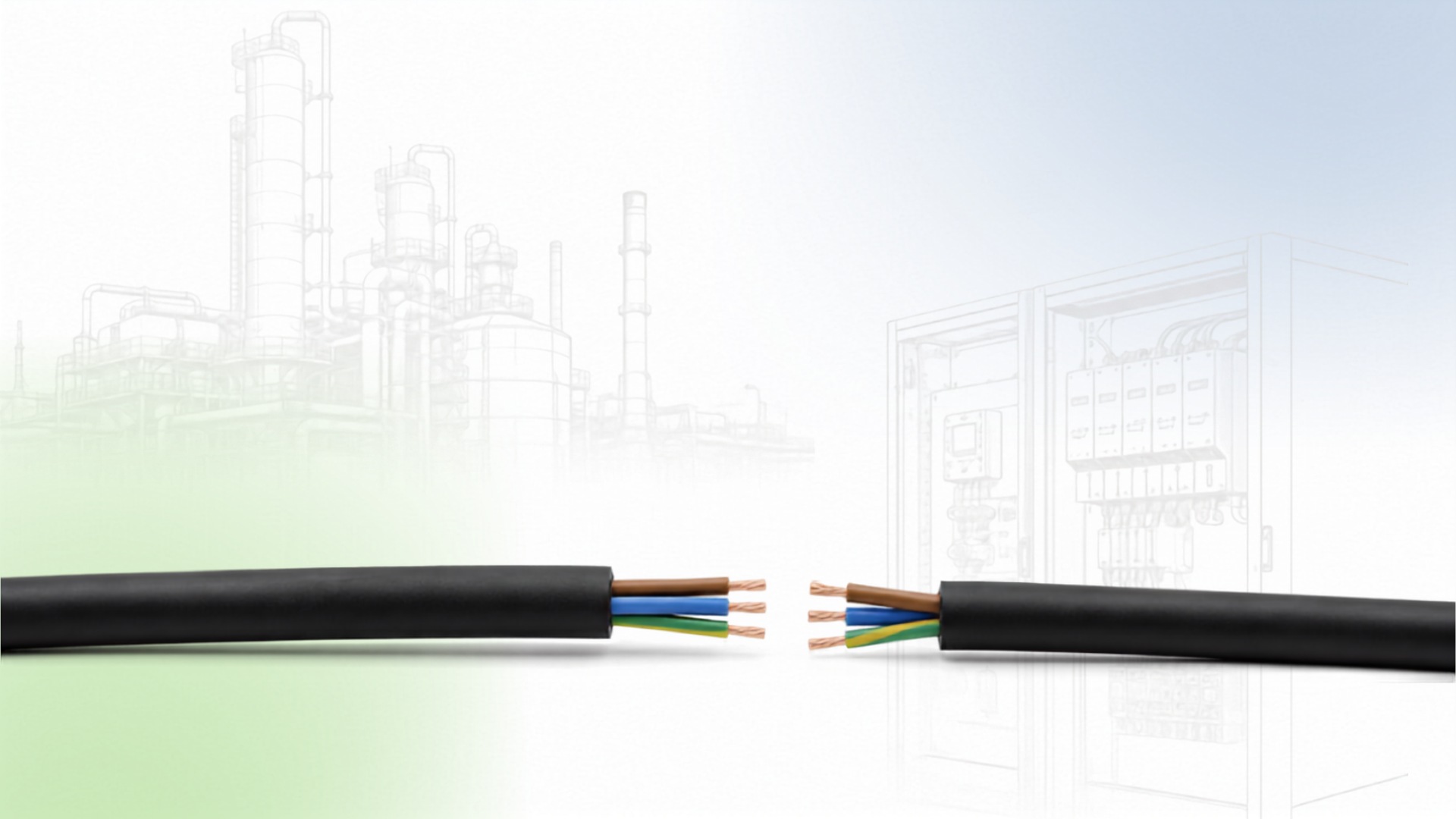
They are elements that connect, power, transmit signals and allow systems to operate continuously. Precisely for this reason, their importance is sometimes taken for granted. As long as everything works, the cable remains invisible. But when a connection is interrupted, becomes loose or loses reliability, the consequences can be much greater than the single component itself.
The Dali Case: One Single Connection, Global Consequences
On March 26, 2024, the container ship Dali struck the Francis Scott Key Bridge in Baltimore, causing it to collapse. The accident led to the death of six people, the temporary closure of a strategic route for the port, and economic and logistical consequences of enormous scale.
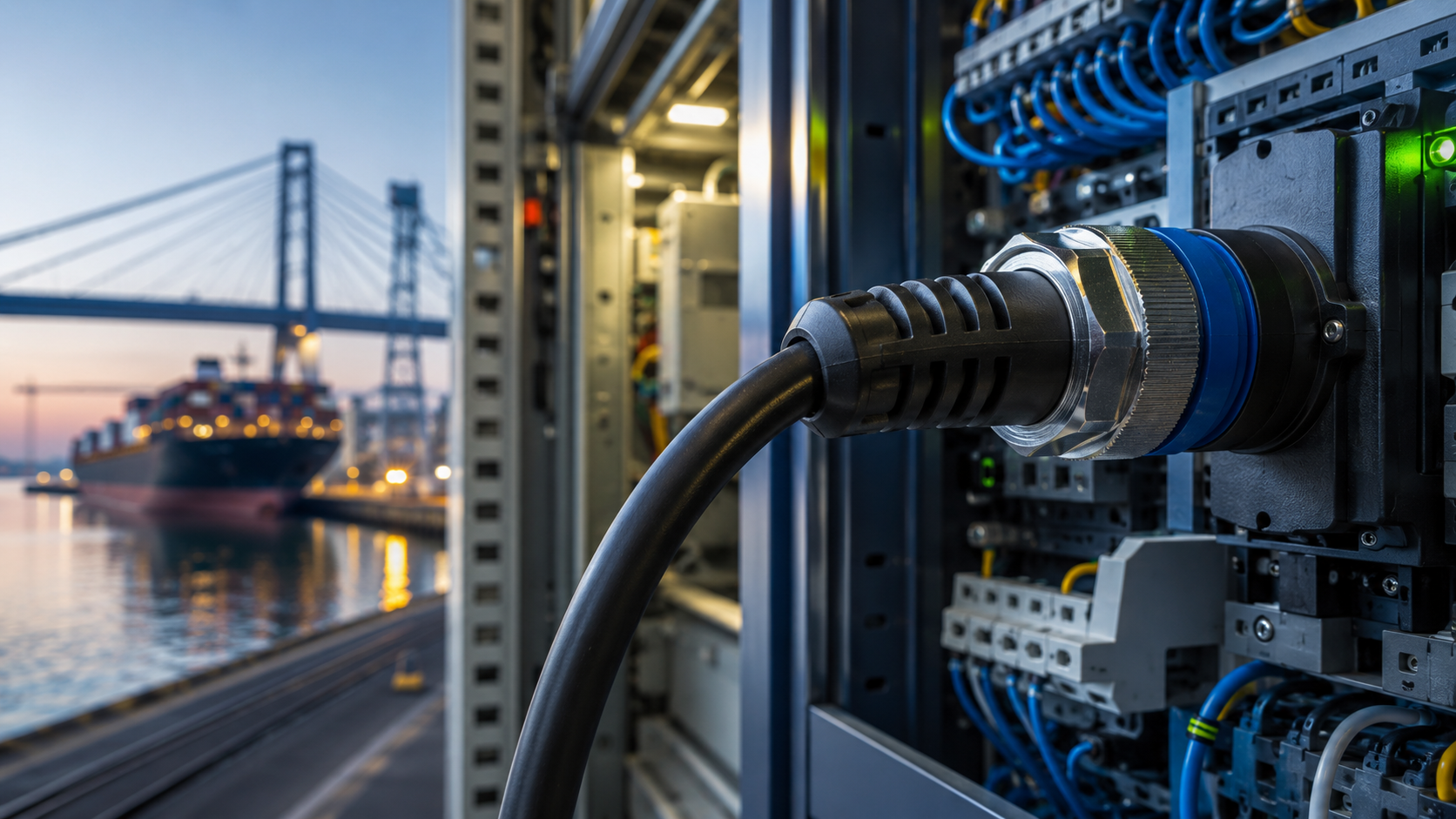
According to investigations by the National Transportation Safety Board, the sequence of blackouts that led to the ship’s loss of propulsion and steering may have been triggered by a loose signal cable inside the onboard electrical system. A seemingly minor technical detail, but located at a critical point in the system.
A little more than two years after the incident, the consequences are still evident. The reconstruction of the bridge will take years and is expected to cost several billion dollars. A single unstable connection helped trigger a chain of events that involved infrastructure, transport, the economy, public safety and the daily lives of thousands of people.
The Dali case is, of course, an extreme example. But the principle it highlights applies to any complex system: when a component is part of a network of technical relationships, its malfunction can generate chain reactions that are difficult to predict.
In Complex Systems, No Connection Is Secondary
An industrial plant, an automated line, an electrical panel or a production machine are systems built on the interaction of multiple elements: power supply, signal, control, protection, movement and communication.
Within this balance, the cable is not just a means of transmitting energy or information. It is an active part of the system’s reliability.
A cable chosen incorrectly, installed without respecting the required conditions, subjected to stresses greater than those it was designed for, or not checked over time can become a weak point. And in complex systems, a weak point rarely remains isolated.
It can cause machine downtime, intermittent malfunctions, signal errors, overheating, process interruptions, damage to connected components or situations of risk for operators.
This is why talking about cables also means talking about safety, operational continuity and responsibility.
Maintenance as a Culture of Prevention
Electrical cable maintenance should not be considered merely a technical activity to be scheduled when a plant is shut down. It is, first and foremost, a culture of prevention.
It means understanding that reliability does not depend only on the initial quality of the component, but also on how that component is installed, used, inspected and maintained over time.
We have already dedicated a specific in-depth article to summer plant maintenance and cable inspection, highlighting how production shutdown periods can become valuable opportunities to check the condition of wiring, connections and the points most exposed to wear.
In this article, however, the focus is not only on “what to check”. It is about understanding why these checks are important. Because a seemingly small anomaly can turn into a much larger problem, especially when the cable is part of a critical system or a continuous production process.
Responsibility Starts Before Installation
The safety of a connection does not begin only during maintenance. It starts much earlier: with the choice of the correct cable.
Every application has specific conditions. There are cables designed for fixed installation, cables for outdoor environments, cables for automation, cables subject to continuous movement, and cables that must withstand oils, abrasion, vibration, torsion, high temperatures or particular mechanical stresses.
Using a cable that is not suitable for the real operating context means increasing the risk of deterioration, premature failures and unexpected interventions. On the contrary, making the right choice helps reduce critical issues and build a more stable and reliable system from the very beginning.
This is why it is important to know how to read cable designations, understand the reference standards and correctly interpret the conditions of use. In the article dedicated to cable designations for industrial automation, we explained how cable designation can become a practical tool for assessing its suitability for a specific application.
Storage and Handling Are Also Part of Reliability
Another often underestimated aspect concerns what happens before installation.
A cable can also be damaged during transport, storage or handling. A bending radius that is not respected, a reel handled incorrectly, inadequate exposure to humidity or UV rays, or unprotected cable ends can compromise cable performance even before installation.
For this reason, we have also explored best practices for correctly storing and handling electrical cables, with useful guidance for warehouses and construction sites.
The quality of a system does not depend only on the product selected, but on the entire path that product follows: selection, transport, storage, installation, connection, inspection and maintenance.
Monitoring Means Knowing the Real Condition of the System
In industrial and infrastructure contexts, constant monitoring of cable condition makes it possible to move from a reactive approach to a preventive one.
Action is not taken only after a fault has already occurred; instead, the signs that may anticipate it are observed: overheating, loose contacts, sheath damage, loosened connections, abrasion, oxidation, changes in performance or intermittent interruptions.
In many cases, these signs are not immediately visible. For this reason, in addition to visual inspection, instrumental checks, electrical tests, tightening checks and thermographic analyses of critical points can be useful.
Monitoring means knowing the real condition of the system, rather than simply assuming that everything is working correctly because no visible problems have occurred yet.
The Role of Sada Cavi: Technical Support, Quality and Informed Choice
Sada Cavi supports companies, installers and designers in choosing the most suitable cables for different applications, offering technical expertise, product availability and solutions for a wide range of sectors: from industrial automation to energy, from civil construction to the most complex systems.
In a market where reliability, safety and operational continuity are increasingly important, choosing the right cable is a technical responsibility. It means assessing the context, anticipating stresses, considering environmental and installation conditions, and building a system capable of operating over time with greater stability.
The cable is not a detail. It is a fundamental part of the system.
Conclusion
The Dali accident dramatically showed how much a single connection can affect the operation of a complex system. A loose cable, placed within a critical context, can contribute to generating enormous consequences.
This is why maintenance, monitoring and the correct choice of electrical cables are not secondary aspects, but central elements of safety and reliability.
In complex systems, every connection counts. And often, the continuity of an entire system depends precisely on what cannot be seen.